

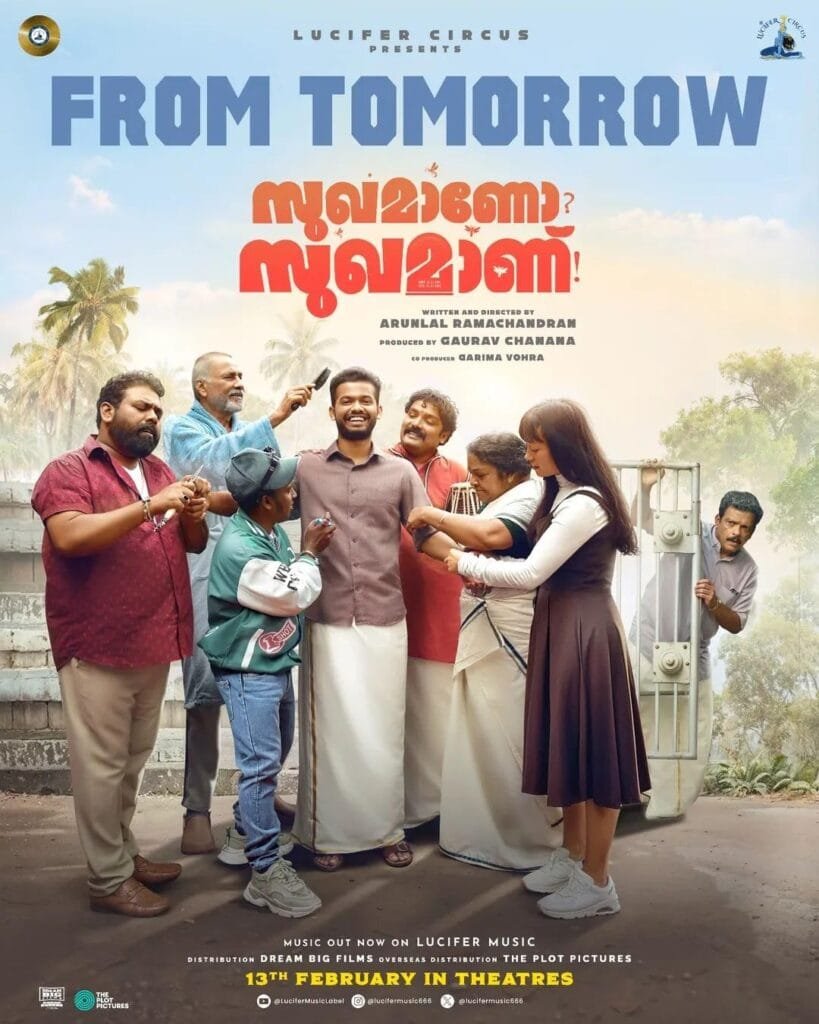
Sukhamaano Sukhamaanu marks the directorial debut of Arunlal Ramachandran, a writer previously known for intense thrillers like Vettah. In a surprising shift of tone, he returns after a long hiatus with a whimsical, light-hearted fantasy that tackles the heavy theme of human isolation. The film asks a simple yet profound question: in an increasingly disconnected world, does anyone truly care to ask, “Are you okay?”

The story follows Theo, a young man who drives an ambulance and lives a solitary life. Scarred by childhood trauma and mocked by his neighbours as “mental,” Theo exists on the fringes of society. His life takes a supernatural turn when he begins interacting with the spirits of the deceased. Rather than a typical horror trope, these “ghosts” serve as a psychological coping mechanism, becoming the makeshift family Theo never had. The film beautifully explores how a fractured mind creates its own support system to survive crushing loneliness.
Performances
Mathew Thomas delivers a standout performance as Theo. He perfectly captures the “restricted affect” of a trauma survivor—portraying a quiet, surface-level numbness that masks deep internal pain. Jagadish continues his streak of excellent character roles as Iype, a cemetery caretaker. He brings immense depth to the film, effortlessly transitioning from humor to heart-wrenching emotion. Devika Sanjay provides a charming presence as Charu, a terminally ill woman who fears being forgotten. While her character follows some familiar tropes, her chemistry with Mathew is warm and sincere. Supporting actors like Noby Marcose and Kudassanad Kanakam provide well-timed, nostalgic humor that keeps the first half breezy.


Direction & Screenplay
Arunlal Ramachandran’s direction is focused and brisk, keeping the runtime to a crisp 100 minutes. While the script occasionally relies on predictable “escapist” beats and some “on-the-nose” dialogue, it succeeds by staying grounded in reality. Notably, the film avoids a cliché “miracle cure” ending, instead choosing to respect the reality of its characters’ struggles. As a directorial debut, it shows a sensitive hand in blending quirky fantasy elements with the clinical accuracy of mental health struggles.

Technical Aspects
Visually, the film adopts a soft, inviting aesthetic that complements its “comfort watch” vibe. Cinematographer Tobin Thomas captures frames that lend a fairytale-like charm to the romantic fantasy setting. The pacing is deliberate; while some scenes feel more like emotional triggers than narrative necessities, the film never feels like it is dragging, moving straight to its emotional core without unnecessary filler.

Music
The music by Nipin Bessant is arguably the film’s heartbeat. The soundtrack is hauntingly beautiful, effectively filling the gaps where the screenplay might falter. The emotional scores enhance the characters’ inner turmoil, elevating the movie to a higher emotional plane and ensuring the audience feels the weight of the characters’ yearning and sorrow.
Overall
Sukhamaano Sukhamaanu is a refreshing, “out-of-the-box” concept that balances controlled cheesiness with genuine heart. It isn’t a high-octane entertainer, but rather a gentle, therapeutic look at how we find connection in the darkest of times.