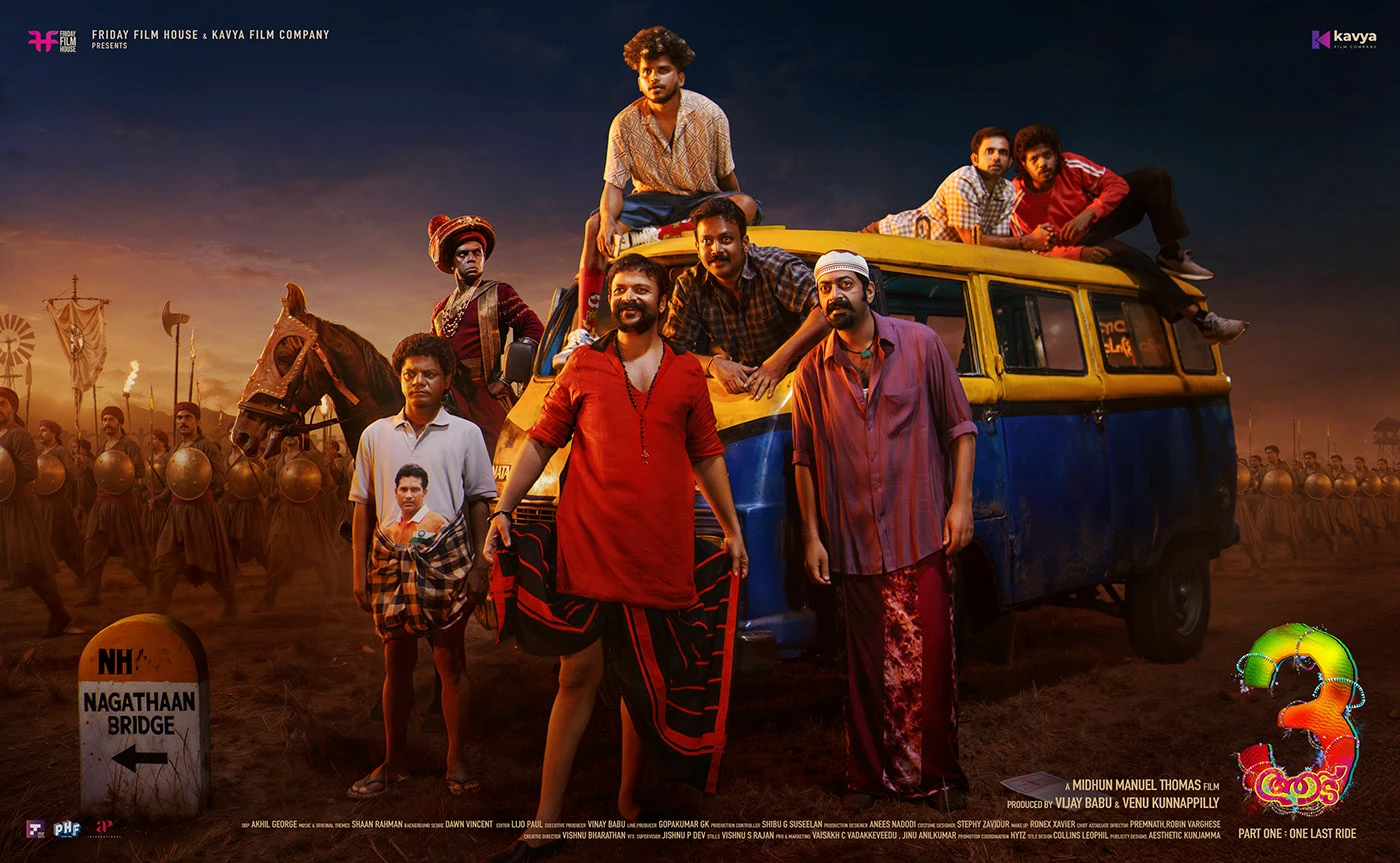

The Aadu franchise has always been a peculiar beast in Malayalam cinema. What started as a box-office failure transformed into a cult phenomenon through DVD releases and internet memes, driven by its collection of lovable, dimwitted characters. In Aadu 3, writer-director Midhun Manuel Thomas attempts to “upgrade” this world of idiots by introducing a massive time-travel plot. The film explores three eras—the late 18th century, the present, and a dystopian 2370 AD—suggesting that dorkiness is a universal constant across human history. While the ambition is sky-high, the result is a bloated, nearly four-hour marathon that often struggles to find its funny bone.
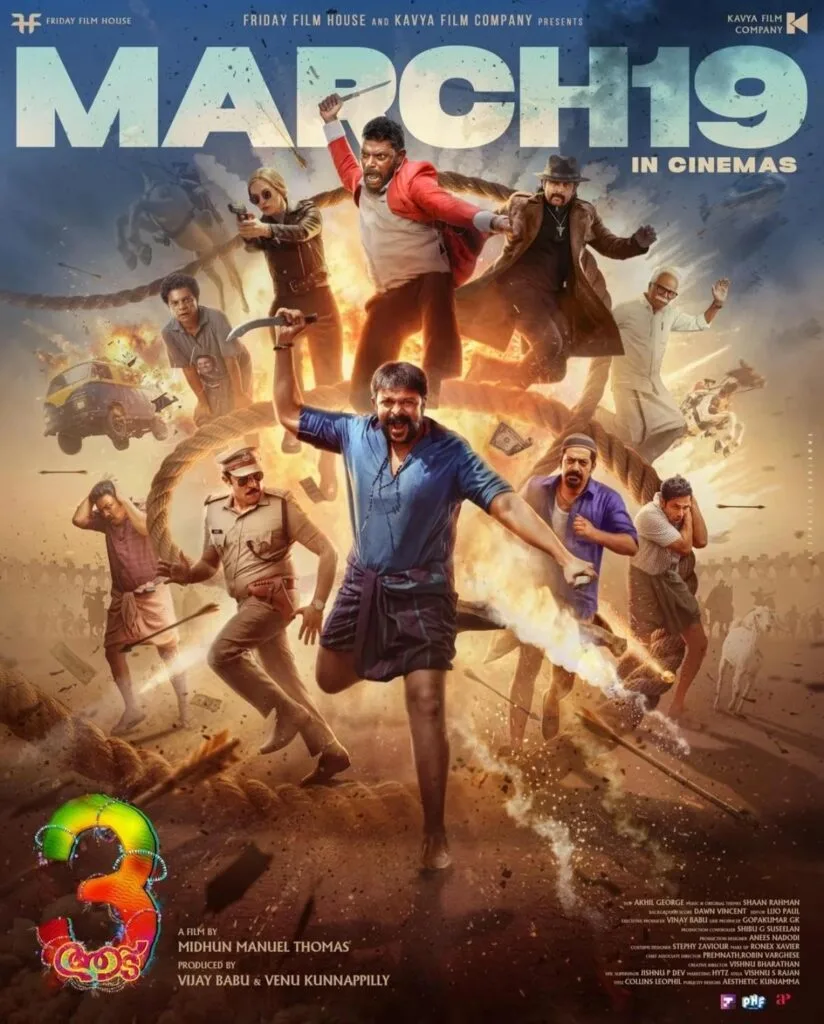
Direction and Writing
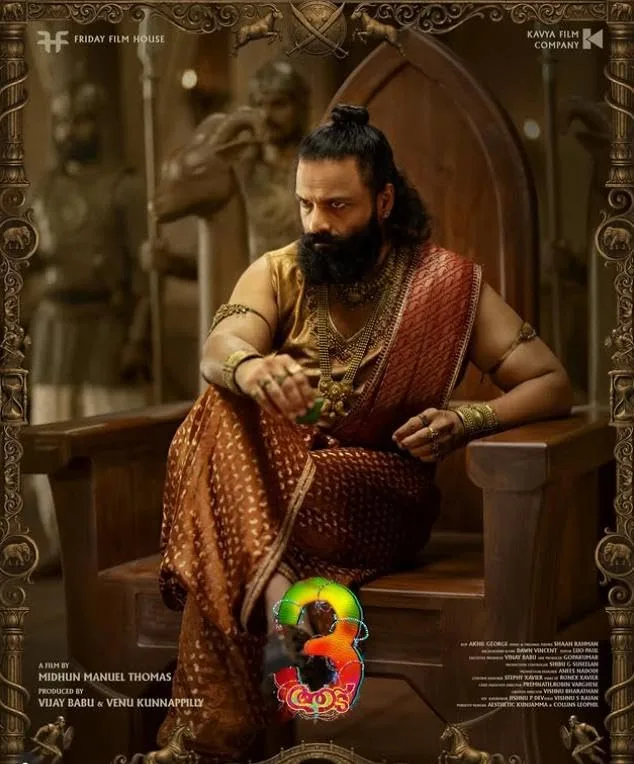
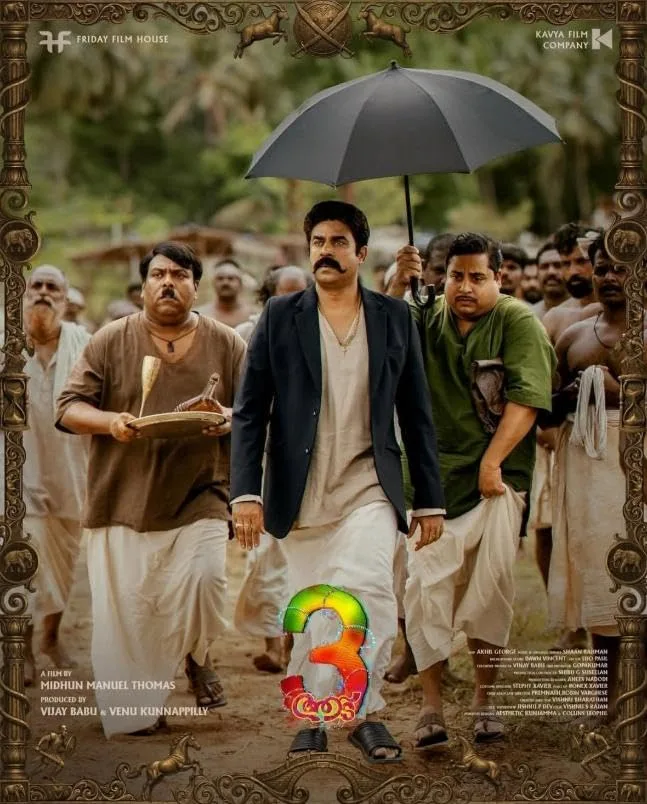
Midhun Manuel Thomas takes a big gamble by moving away from the simple, “unhinged” randomness of the first two films. Here, the plot revolves around a “Star Dust” celestial stone and the reincarnation of Shaji Pappan’s gang across timelines. In 1790 AD, Shaji Pappan is King Padmanabhan, facing off against an army led by Dude (Azam Khan).
The direction shows a clear conflict between wanting to be a “Pan-Indian” epic and staying a nonsensical spoof. By making the characters less cartoonish to fit the fantasy setting, the director has compromised the very soul of the franchise. The writing relies heavily on wordplay and puns—like mistaking “terrorist” for “tourist”—which feels laboured compared to the organic, situational humor of the previous installments. Furthermore, splitting the story into two parts feels more like a commercial business decision than an artistic necessity.
Acting
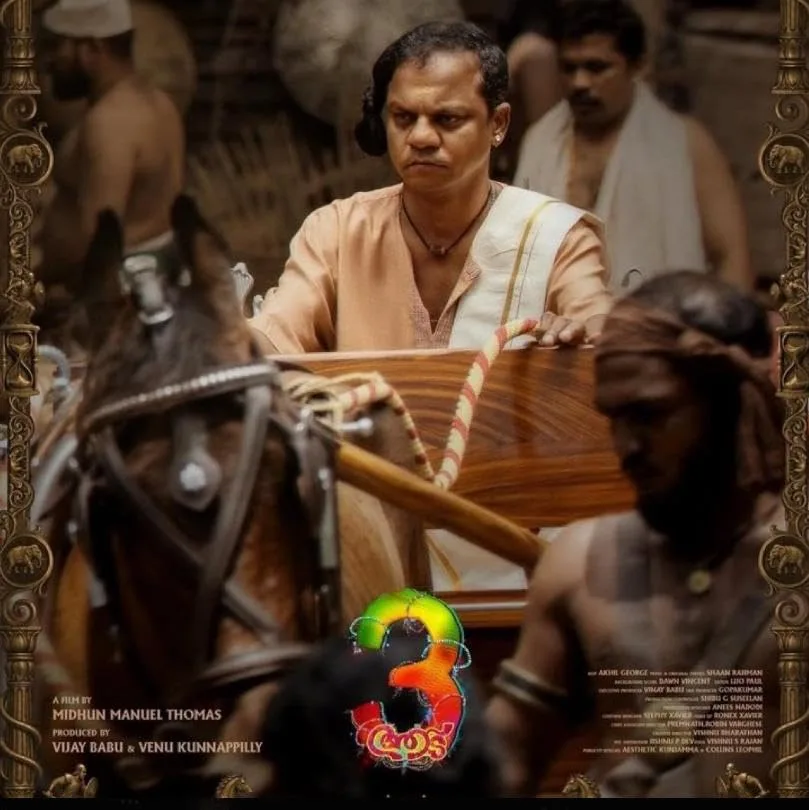
The ensemble cast remains the film’s saving grace. Jayasurya makes a welcome return, successfully differentiating between the modern-day Pappan and the historical King Padmanabhan while keeping the character’s core DNA intact. Vinayakan provides the film’s most entertaining moments, mocking sequences from Aadujeevitham and referencing his own iconic lines.
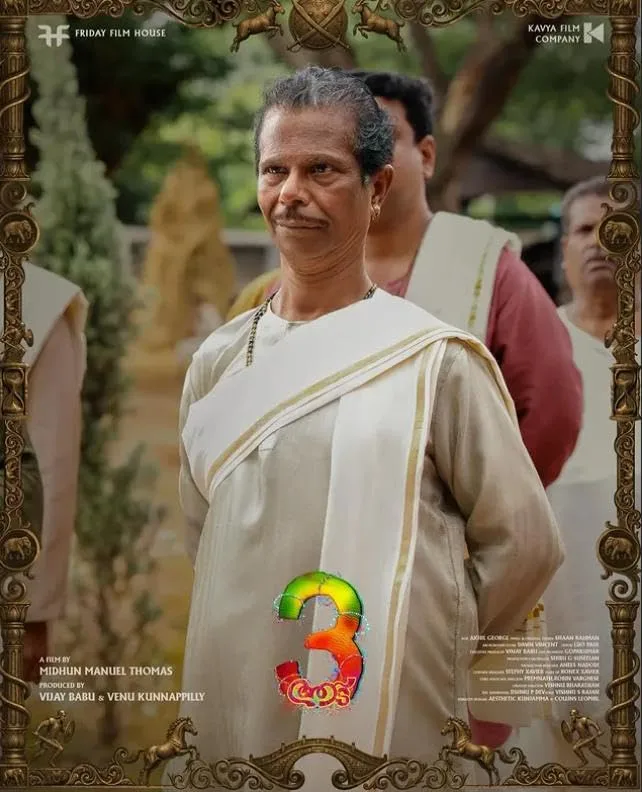
Supporting actors like Saiju Kurup (Arakkal Abu) and Dharmajan (Captain Cleetus) are back, but they feel restricted by a script that forces them to follow a rigid plot rather than letting their natural idiocy shine. Indrans is effective in his triple roles, and Sunny Wayne plays a British officer with conviction. However, newcomer Alleya Bourne is noted more for her physical stunts than her acting range.
Technical Aspects
Visually, Aadu 3 is a significant step up. The production design by Anees Nadodi and cinematography by Akhil George bring the 1700s to life with impressive sets and costumes that look professional, even if they aren’t historically accurate. The transitions between the future, past, and present are handled smoothly. However, the film is severely hindered by its editing. The first half feels incredibly long, and the narrative flow is constantly interrupted by a long “assembly line” of character introductions across two timelines.

Music
The music remains a highlight. Shaan Rahman’s iconic character themes and intro songs provide the energy needed to keep the audience awake during the slower segments. The background score by Dawn Vincent works well to bridge the gap between the historical drama and the modern-day chaos. While the music helps glamorize the “mass” moments, it sometimes feels like a cover for the lack of a coherent story.
Overall
Aadu 3 is a film of “lofty ambitions” that ultimately chokes under its own weight. It offers a few hearty laughs and a truly fascinating climax that sets the stage for a sequel, but the price of admission is enduring a long “snoozefest” of repetitive jokes. For die-hard fans of Shaji Pappan, the nostalgia might be enough, but as a standalone comedy, it misses the mark. Ironically, in a movie named after a goat (Aadu), the titular animal is nowhere to be found—replaced instead by a donkey.