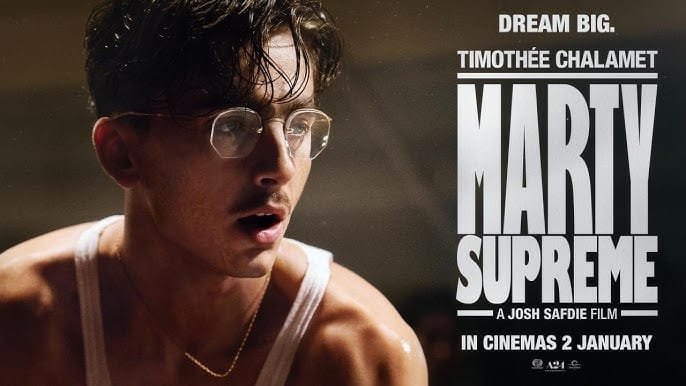

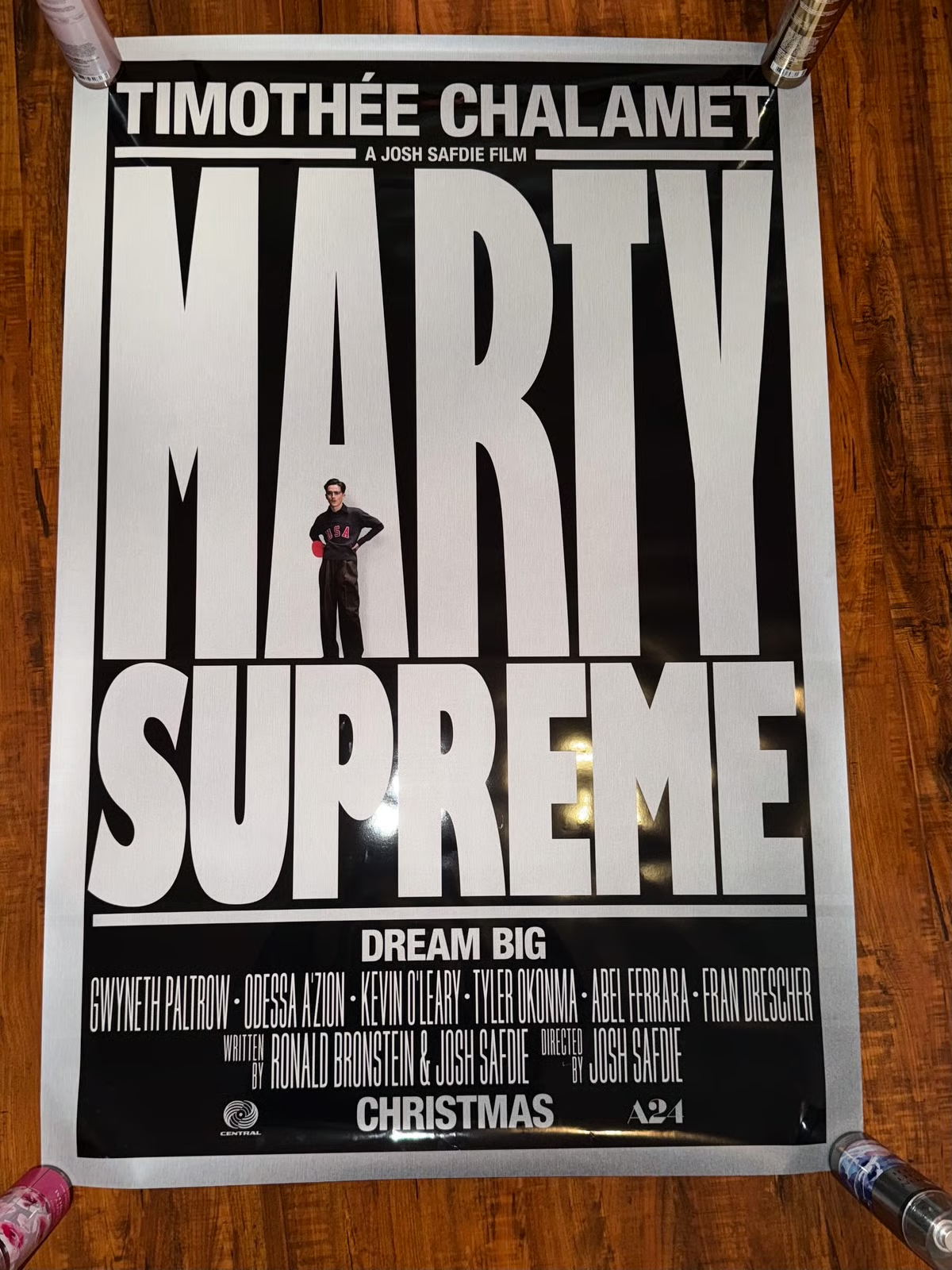
Josh Safdie’s Marty Supreme is not your typical inspiring sports story. Instead of the usual journey of an underdog working hard to reach the top, this film is a wild, chaotic look at a deeply flawed man named Marty Mauser (based on real-life ping-pong player Marty Reisman). Set in 1952, the movie feels less like a historical tribute and more like an explosion of ambition and ego. From the very start—where the opening credits turn a human egg into a spinning ping-pong ball—Safdie shows us that this is a story about a man who believes he is destined for greatness, even if he has to destroy everything around him to get it.
Acting
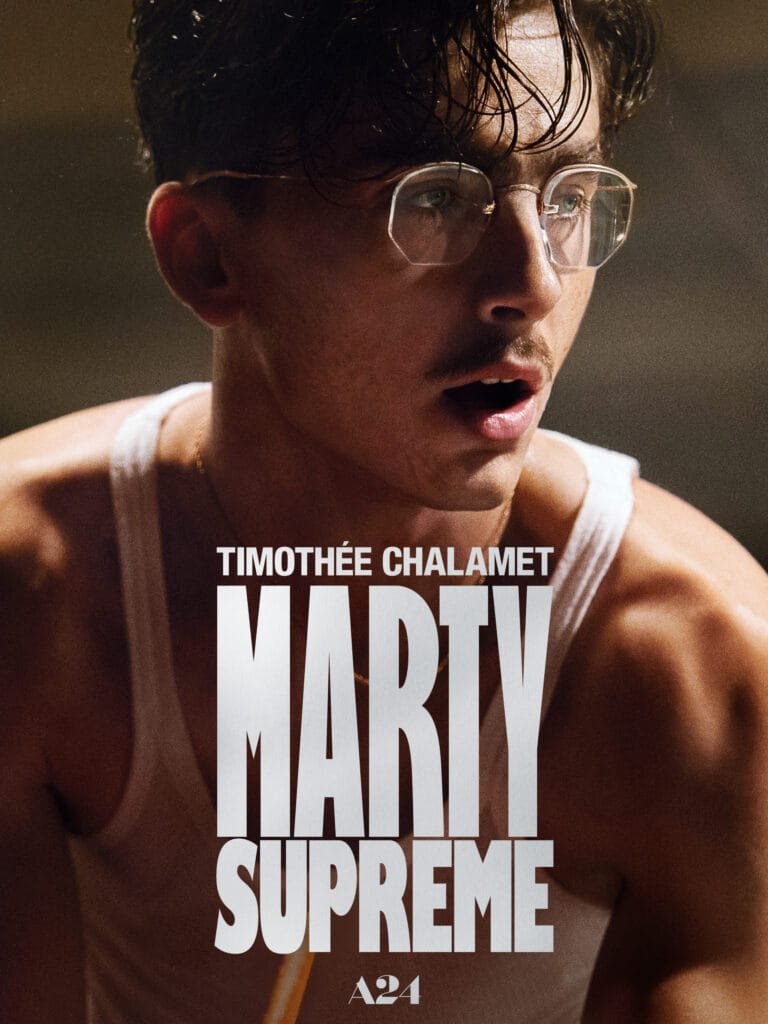
Timothée Chalamet delivers a career-defining performance as the fast-talking, restless Marty. He plays the character as someone who is constantly “overclocked,” speaking and moving faster than everyone else because he refuses to wait for permission. Chalamet doesn’t try to make Marty likable; instead, he makes his hunger for fame magnetic.The supporting cast is equally impressive.Gwyneth Paltrow, in her first non-Marvel role in a decade, she is excellent as the tragic actress Kay Stone, whose relationship with Marty is a mix of passion and business.Kevin O’Leary & Tyler Okonma as Mr. Wonderful” and “Tyler, The Creator” make surprising and strong acting debuts. O’Leary plays a ruthless businessman perfectly, while Tyler brings a grounded energy as Marty’s friend, Wally. Odessa A’zion provides the film’s emotional weight as Rachel, the woman Marty treats as an inconvenience even when she carries his child.
Direction
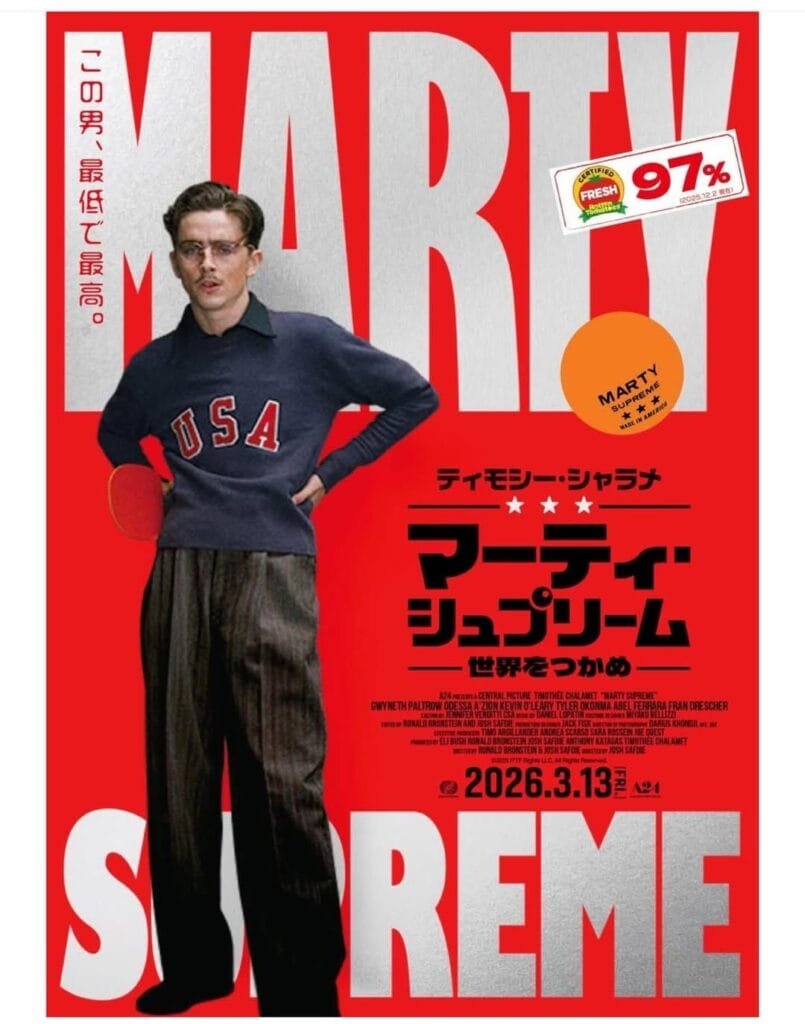
Josh Safdie, working solo without his brother Benny, channels the spirit of Martin Scorsese. The film uses long takes, fast dialogue, and a “stressful” energy to keep the audience on edge. Safdie is a master at showing how the “American Dream” can turn into a nightmare. He frames the 1950s not as a golden age, but as a “pressure cooker” of greed and desperation. He isn’t afraid to show Marty’s ugliness, including a shocking scene involving a Holocaust survivor’s trauma being sold just to get a business deal.In Uncut Gems (2019), the anxiety is external; Howard Ratner is a man being hunted by his debts and the literal walls closing in on him. In Marty Supreme (2025), the pressure is internal and psychological. Josh Safdie shifts the focus from the thrill of the “gamble” to the pathology of the “winner.” While Howard is a desperate man trying to survive his mistakes, Marty is an entitled man who refuses to believe he can make mistakes. Marty Supreme feels more like a character study of a narcissist, using the frenetic editing and 35mm grain to show how ambition can be just as destructive as a gambling addiction.
Technical Side
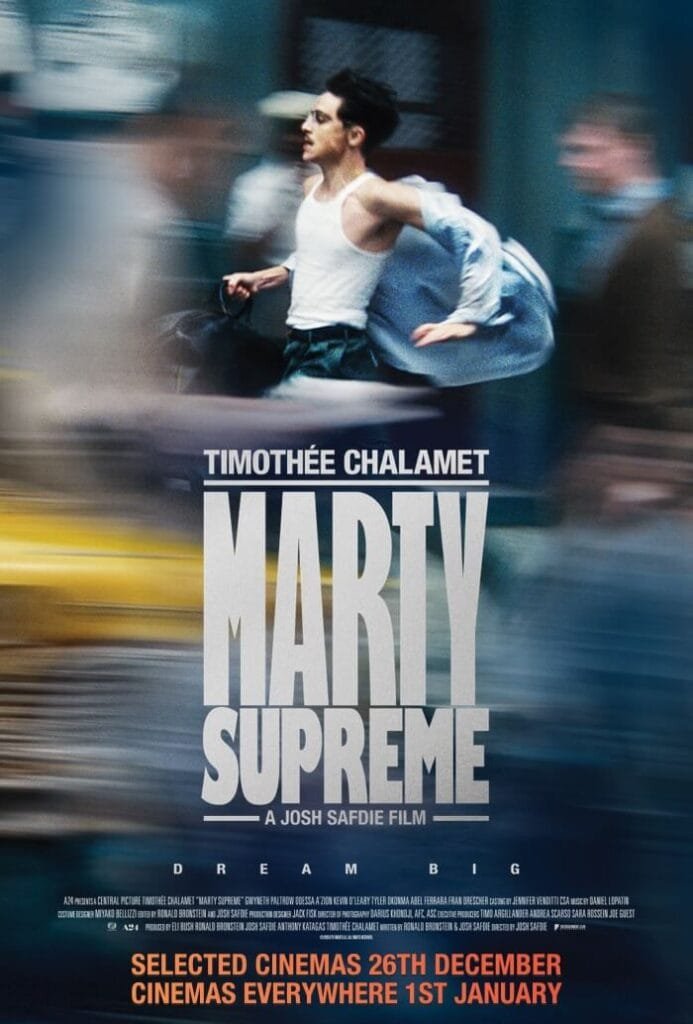
Visually, the film is stunning and immersive. Cinematographer Darius Khondji shot the movie on 35mm film, giving it a grainy, real-world texture. Many scenes are filmed with tight close-ups, making the viewer feel as trapped and “boxed in” as the characters. The editing by Safdie and Ronald Bronstein is fast-paced, mimicking the speed of a ping-pong match. While the 152-minute runtime can feel exhausting, the technical choices successfully build a world that feels both historical and strangely modern.
Music
The music by Daniel Lopatin (Oneohtrix Point Never) is one of the film’s most unique features. Instead of using 1950s jazz, the score is filled with 1980s synthesizers and new wave beats. This creates a “productive dissonance”—the music sounds like the future, while the characters are stuck in the past. The soundtrack acts like Marty’s nervous system, constantly pushing the story forward and highlighting his frantic desire to be “the next big thing.”
Overall
Marty Supreme is a loud, abrasive, and brilliant character study. It’s a movie about the cost of winning and the emptiness of ego. It dares you to watch a man pay for his pride, one ping-pong ball at a time.