

Following the massive success of Manjummel Boys, director Chidambaram returns with an entirely different cinematic experience in Balan: The Boy. Instead of relying on spectacle or conventional thrills, the film quietly immerses viewers in the fragile lives of a mother and her son, whose existence is shaped by fear, trauma, and constant reinvention. What begins as a seemingly innocent fairy tale gradually unfolds into a deeply affecting psychological drama about survival, identity, and the irreversible loss of childhood innocence.
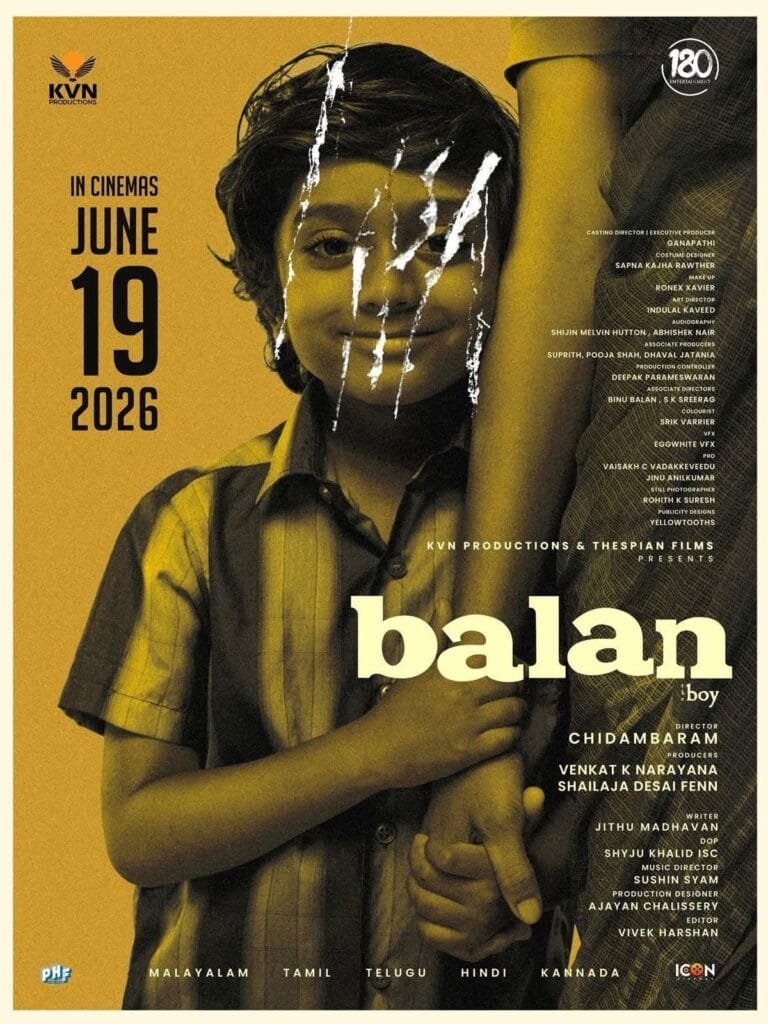
The opening sequence immediately establishes the film’s distinct tone. Colourful crayon drawings initially create the impression of a warm childhood memory, only for the audience to realise that they decorate the walls of a prison cell where a young boy lives with his imprisoned mother. This striking contrast becomes a metaphor for the entire film, where innocence continuously exists alongside darkness.
Story and Screenplay
Jithu Madhavan’s screenplay is undoubtedly one of the film’s greatest strengths. Rather than explaining everything through lengthy dialogues, the script trusts visual storytelling and carefully planted emotional details. Small conversations, seemingly ordinary promises, and passing observations gradually gather emotional weight, rewarding patient viewers with a deeply satisfying payoff.
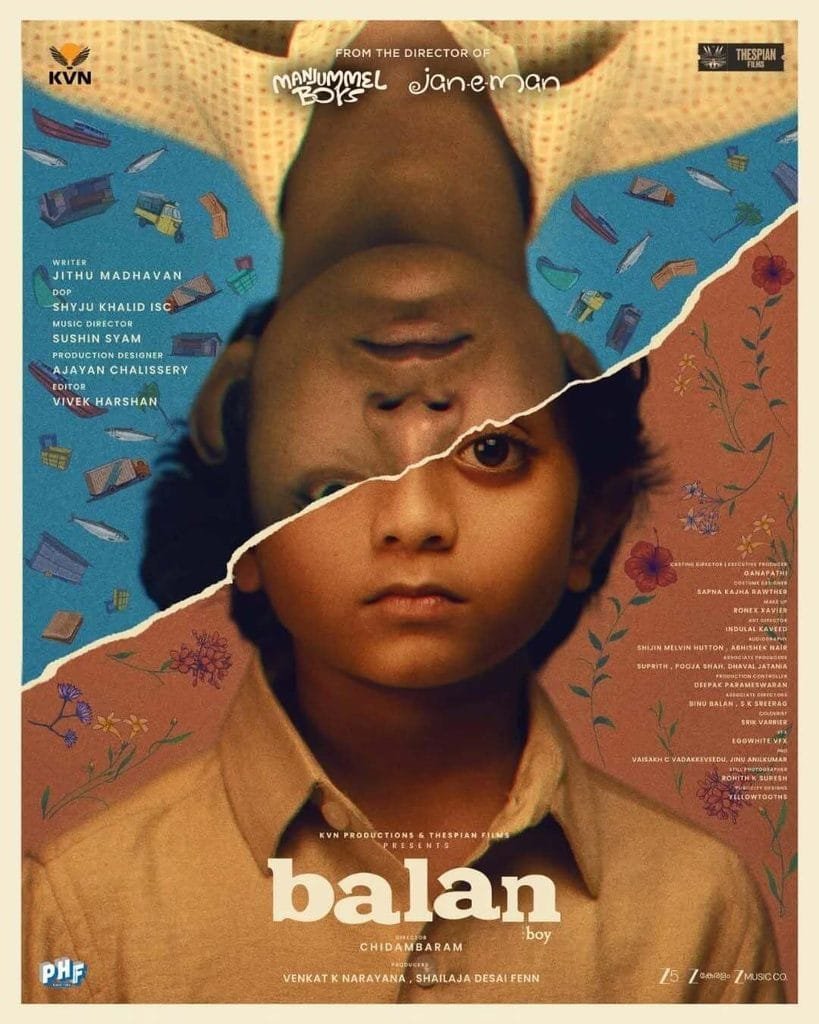
The narrative follows a mother who gives birth while imprisoned and, after her release, spends years moving from one place to another with her son. Each new destination brings fresh identities, fabricated histories, and another attempt to escape a painful past. Their lives become a continuous journey without permanence, where trusting another person itself becomes dangerous.
One of the screenplay’s finest achievements is its ability to portray the passage of time naturally. Without relying on obvious narrative devices, the film smoothly shifts between different stages of the characters’ lives, allowing audiences to experience their emotional growth rather than simply witnessing it. The later portions evolve into an intimate character study before transforming into a gripping thriller. Although the final act occasionally feels slightly more conventional than the emotionally subtle storytelling that precedes it, the climax remains emotionally rewarding.
Perhaps the film’s most remarkable quality is its refusal to judge its characters. Instead of asking whether their actions are morally right or wrong, it explores how trauma shapes behaviour and how survival often forces impossible choices. This compassionate perspective gives the narrative extraordinary emotional depth.
Direction
Chidambaram demonstrates remarkable artistic confidence by choosing an intimate, character-driven story after the commercial triumph of Manjummel Boys. Rather than chasing larger commercial formulas, he invests entirely in human emotions and layered storytelling.

His direction is restrained yet emotionally powerful. The film unfolds with patience, allowing silence, expressions, and visual details to communicate emotions that words never could. The recurring fairy-tale imagery, repeated changes of identity, and subtle symbolism enrich the narrative without ever feeling forced.
Even when the film shifts toward thriller territory, Chidambaram never loses sight of its emotional core—the extraordinary relationship between a mother and her son. His refusal to indulge in excessive melodrama ultimately makes the emotional moments even more impactful.
Performances
The performances elevate the film to another level. Farzana Palathingal delivers an exceptional performance as the unnamed mother. Through expressive eyes and restrained body language, she convincingly portrays a woman burdened by guilt, fear, fierce maternal love, and emotional exhaustion. Her performance remains one of the film’s strongest emotional anchors.
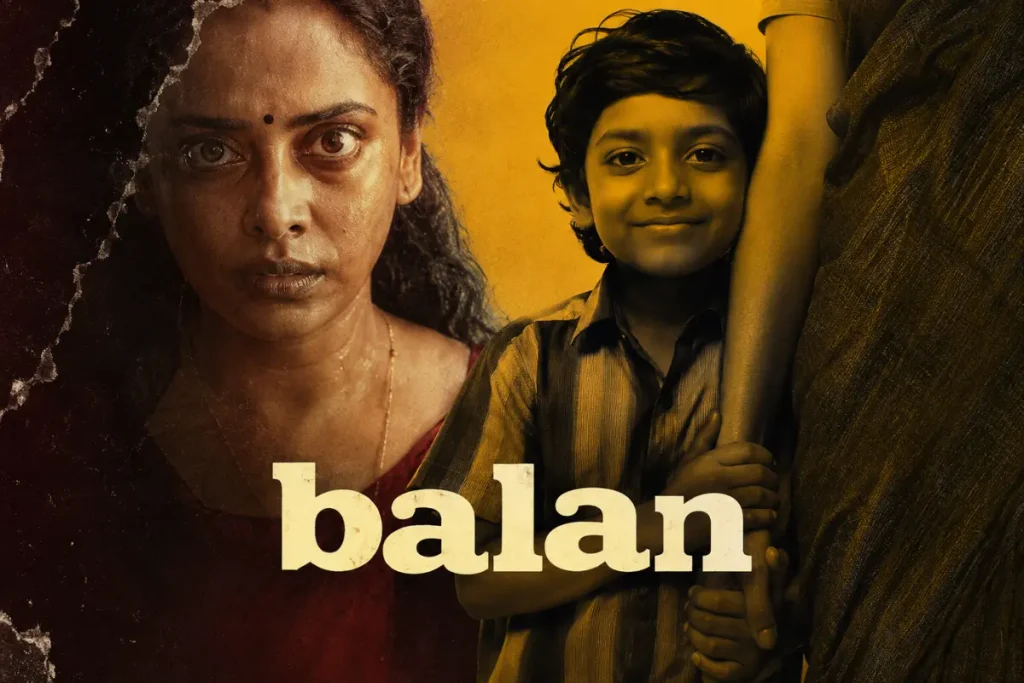
Young Adisheshan is outstanding as the younger Balan. His innocence, curiosity, and quiet observation beautifully capture a child growing up in circumstances no child should experience. Mohammed Sinan, portraying the older version of Balan, delivers a mature and emotionally complex performance, effectively reflecting the psychological scars left by his childhood.
Dolly June steals several scenes as the eccentric yet compassionate grandmother. Her unconventional character brings warmth, humour, and emotional balance to an otherwise sombre narrative. Jean Paul Lal impresses as the morally complex police officer, while Beena Antony leaves a memorable impact despite limited screen time.
In a comparatively brief but significant role, Tovino Thomas delivers one of the most understated performances of his career. Completely shedding star mannerisms, he brings remarkable humanity and emotional depth to his character, making his presence linger long after his scenes conclude.
Technical Aspects
Technically, Balan: The Boy is an exceptionally crafted film. Shyju Khalid’s cinematography captures loneliness, fear, and isolation through carefully composed frames and atmospheric lighting. Forest paths, empty landscapes, prison spaces, and rural settings become emotional extensions of the characters themselves. Every frame contributes to the storytelling rather than simply serving as visual decoration.
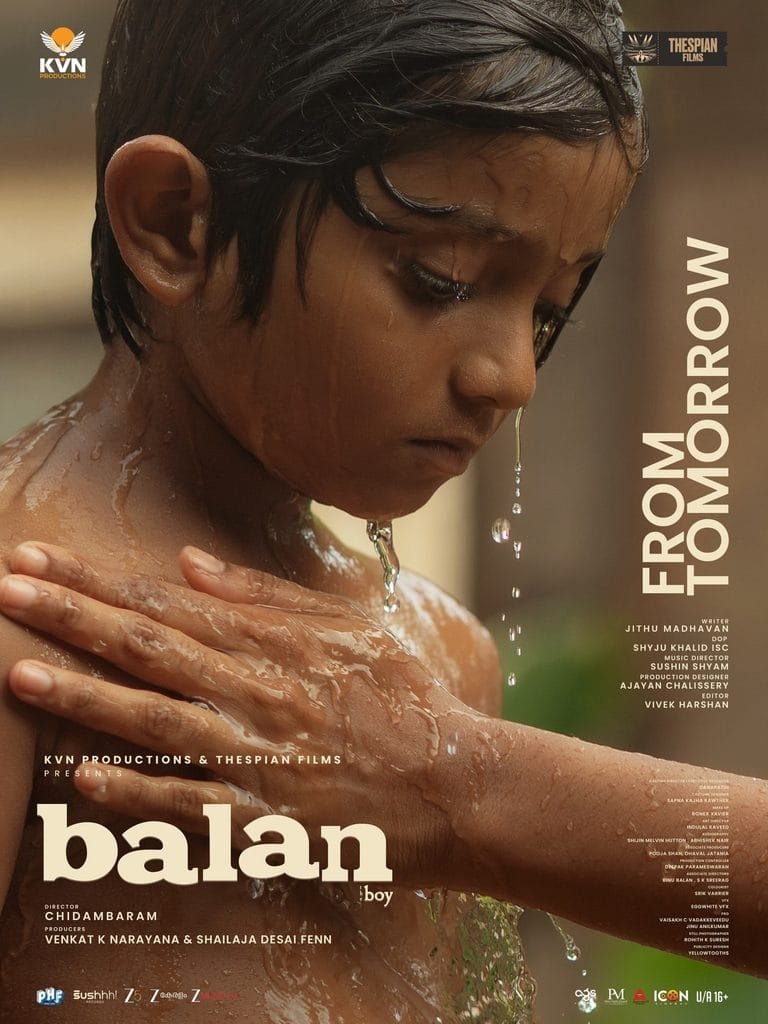
The production design convincingly reflects the many identities and locations the characters inhabit, enhancing the realism of their constantly shifting lives. Vivek Harshan’s editing deserves special appreciation for maintaining a seamless narrative flow despite significant time jumps. The transitions never feel abrupt, allowing audiences to gradually discover the larger emotional picture.
Music and Background Score
Sushin Shyam once again demonstrates why he remains one of Malayalam cinema’s finest composers. Instead of overwhelming scenes with loud orchestration, his restrained background score quietly amplifies tension, melancholy, and emotional vulnerability. The music never dictates emotions but gently guides viewers into the characters’ inner worlds.
The haunting melodies, minimal orchestration, and emotionally charged closing musical passages leave a lasting impression, complementing the film’s introspective nature beautifully.
Overall
Balan: The Boy is far more than a survival thriller. It is an emotionally layered examination of motherhood, identity, trauma, and the painful erosion of innocence. The film constantly reminds us that survival often exists in a moral grey area where conventional notions of right and wrong lose their meaning.

While the final act slightly sacrifices the intimacy of the earlier portions in favour of a more traditional thriller structure, the emotional impact remains undeniable. Outstanding performances, intelligent writing, sensitive direction, stunning visuals, and a haunting musical score come together to create one of the most emotionally resonant Malayalam films of recent years.
Rather than offering easy redemption or comforting resolutions, Balan: The Boy leaves viewers reflecting on the invisible scars left by trauma and the heartbreaking reality of children who are never allowed to experience a normal childhood. It is a fearless, deeply compassionate, and unforgettable cinematic achievement that firmly establishes Chidambaram as one of the most exciting filmmakers in contemporary Malayalam cinema.