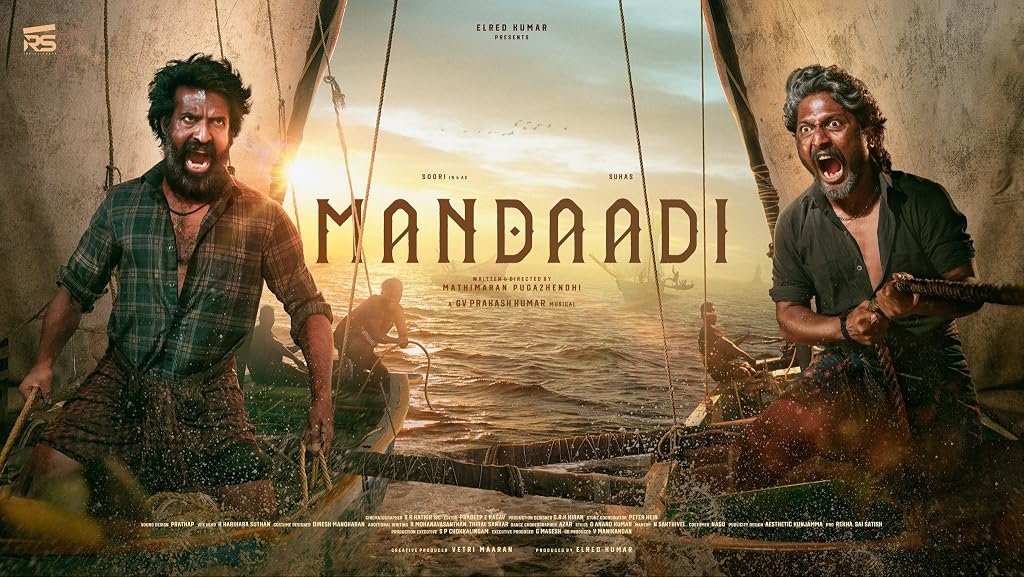

In the sports drama Mandaadi, director Mathimaran Pugazhendhi dives into an unexplored corner of Tamil Nadu’s coastal culture: traditional sailboat racing. Drawing stylistic inspiration from his mentor Vetri Maaran’s Aadukalam, Pugazhendhi crafts a socio-political sports story set in Mugavaipatnam. The story follows Kaali / Muthukaali (Soori), an ex-champion living in exiled obscurity in Chennai, who is forced back to his hometown to train local youths after a conflict breaks out with his former friend turned rival, Saattappuli (Suhas). Mandaadi uses a conventional sports formula to examine community rights, coastal traditions, and political power.
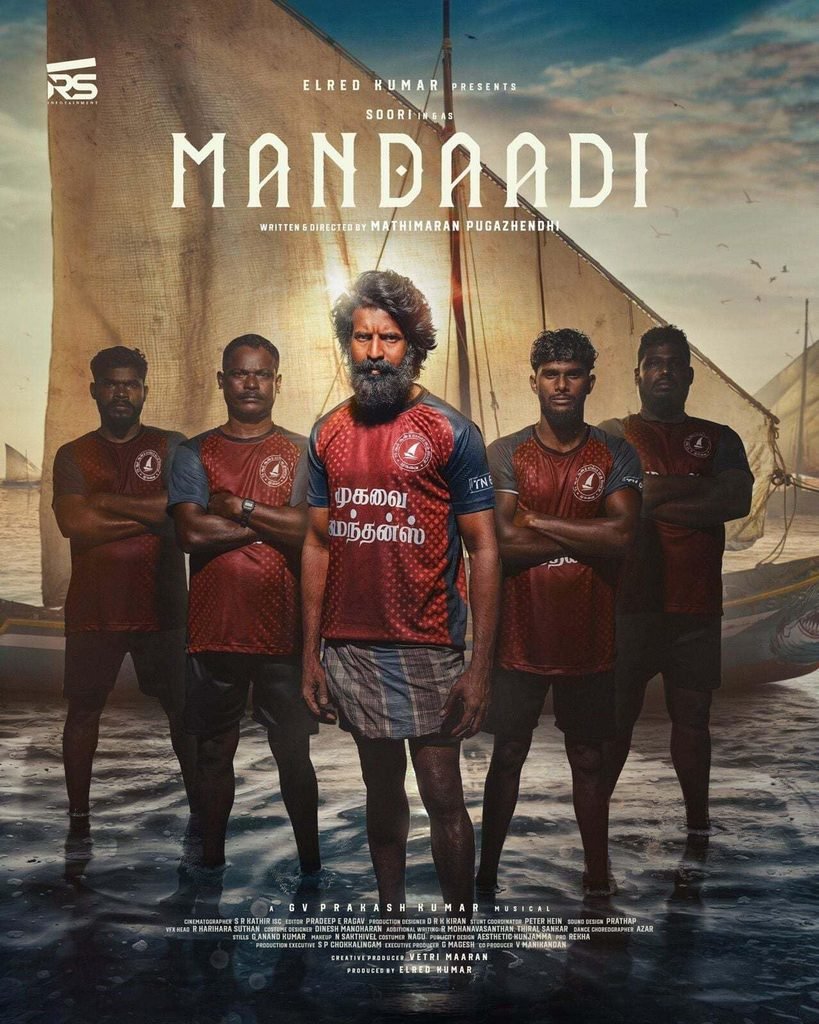
Directing and Narrative
Mathimaran Pugazhendhi relies on a familiar template—a fallen hero returning to face past traumas and lead a team of underdogs. The director sets a fast pace from the opening scenes, dropping viewers directly into the conflict without lengthy introductions. The script weaves socio-political themes into the sports narrative: Saattappuli’s practice of hiring outside racers deprives local youths of learning traditional sea skills, turning the race into a struggle for community honor and survival.
While the first half builds tension through an intriguing backstory, the second half relies heavily on predictable flashbacks and standard sports drama tropes. The narrative follows a well-worn structure—from recruitment and training montages to a high-stakes final showdown—which dilutes the emotional impact of the character conflicts.
Performances
Continuing his shift from comedic roles to grounded leads, Soori brings a quiet, dignified presence to Kaali. He portrays the character’s internal pain with restraint, prioritizing steady leadership over exaggerated heroism.Delivering a standout performance, Suhas plays the antagonist Saattappuli with intensity. He matches Soori’s screen presence, turning the former friend turned corporate rival into a compelling opposing force.Portraying Angel Rakkamma, Nambiar gives a strong performance in key emotional scenes, particularly during her character’s re-encounter with Kaali.Veteran actor Sathyaraj brings authority to his role as Machamuni, the traditional mentor, while Mithun Jai Sankar offers solid support as the impulsive young racer, Maari.
Technical Aspects
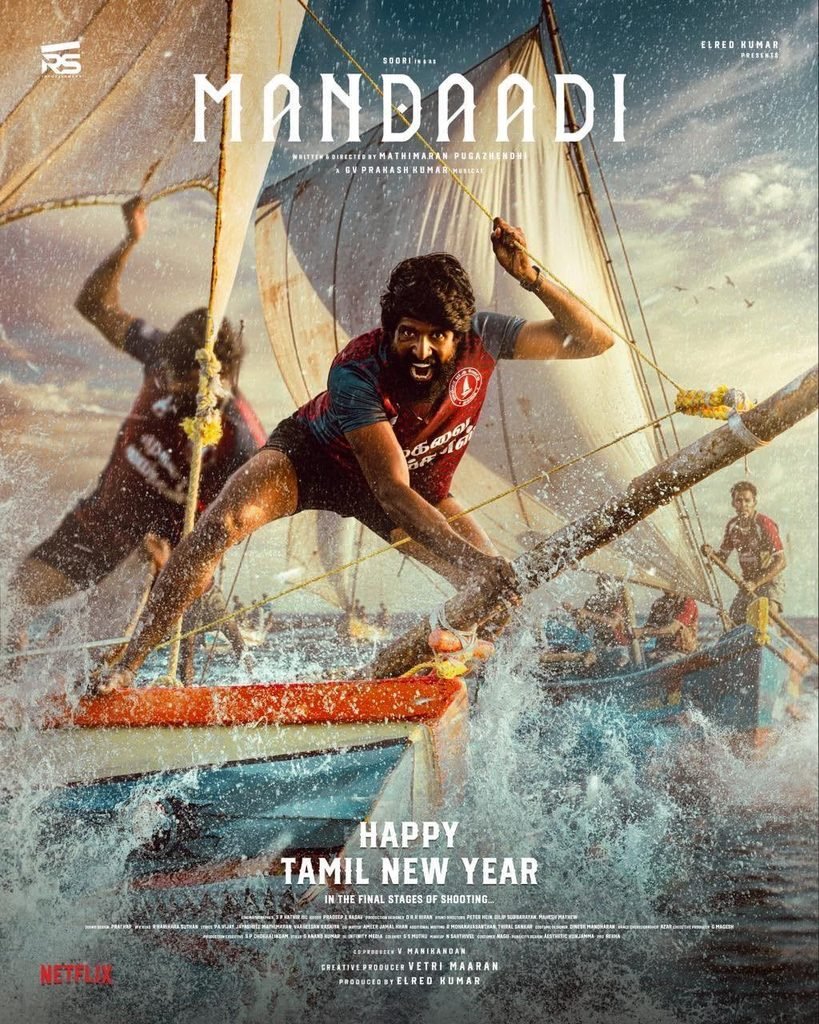
The technical execution of the sailboat races is the film’s strongest element. The action sequences on the water are well-planned, capturing the movement of the tides, shifting winds, and physical demands of the sport. The camera work during these aquatic set-pieces creates an immersive experience that elevates the racing portions.However, outside of the sports sequences, the editing occasionally rushes through quieter character beats, favoring fast transitions over long-form dramatic setup.

Musical Perspectives
G.V. Prakash Kumar’s musical score provides energy throughout the film, particularly during the action and racing sequences. Heavy percussion and driving rhythms complement the movement on the water, helping build momentum during critical moments. While effective in the sports segments, the score occasionally overwhelms quieter dialogue-driven scenes, driving emotional reactions rather than letting the drama develop naturally.
Overall
Mandaadi is a solid sports drama that stands out primarily for its unique setting and aquatic action choreography. While the core story relies on familiar tropes and predictable narrative beats in its second half, earnest performances from Soori and Suhas, alongside well-crafted boat-racing sequences, make it an engaging theatrical watch.